You are considering marriage, and odds are you've had many important conversations with your partner, and you probably think you know each other
and that you're ready for marriage.
But odds are your conversations have not been detailed enough or deep enough to really set you up for a long-lasting love.
Today, we are sharing three conversations that we think every couple should have before marriage.
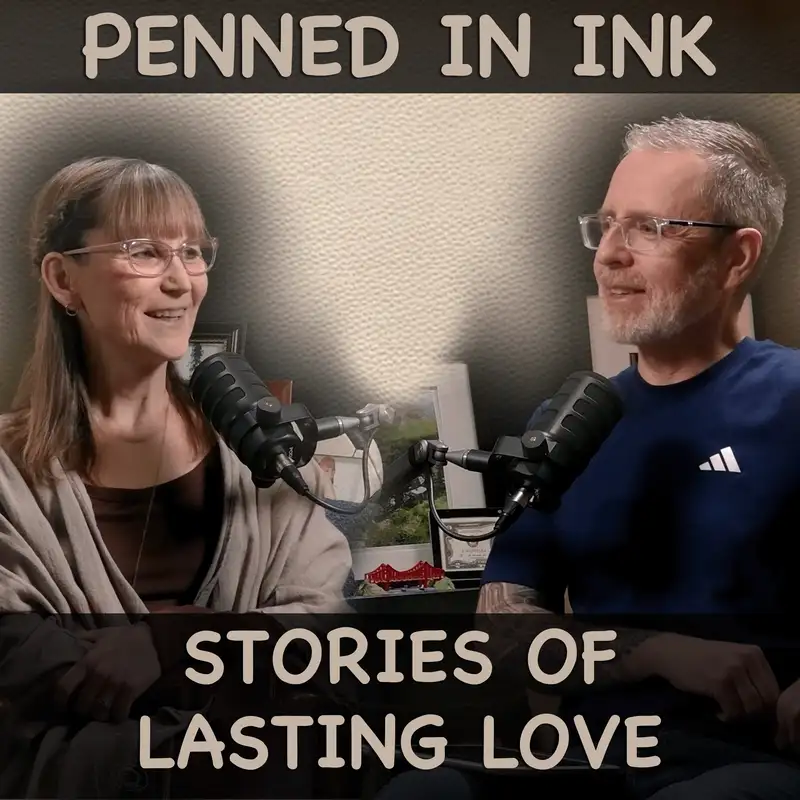
Welcome to Penned in Ink, a podcast where we discuss marriage and the power of long-lasting love.
Okay, so I just said these conversations don't go deep enough, they're not detailed enough.
So we must be getting ready to give you a laundry list of all the questions that you should be talking about before marriage.
Is that what we're about to do?
We are not. As much as I love checklists...
She does love a checklist.
I do love checklists.
That's not what this episode is about.
It's more about exploring the three areas that we've identified for today and going deeper, asking the question behind the question.
Yep, exactly. So if you're looking for a checklist, a laundry list of questions, there are many of them out there.
Melissa might have a couple in her bag of tricks.
I do, I do.
And why would you have checklists in your bag of tricks?
Are we here at 30 years into our marriage just going through checklists of questions, or is there another reason you have that stuff?
There is. So let me introduce who we are.
For those of you who haven't seen our podcast before, I'm Melissa.
This is my husband, Michael.
We have been together for over 30 plus years, married for 30 years, together for even longer than that.
And I'm also a mental health clinician.
And this podcast is based on our time that we've been together, that we've known each other, in addition to what I've learned in my counseling practice.
This is not professional advice.
This is just us relaying what we have learned in all of our use together.
So that's why she has checklists of the 100 questions you should ask before getting married, or the 300 questions.
I looked at the 300 question one, it's actually predated.
So you actually maybe need to do a new list, but that's a, we'll get into that.
Right, I've been sending that to people for years.
I think it's time to update.
It had nothing about social media on it.
Can you believe that?
Yeah, so we'll talk about that a little bit.
All right, that's probably enough about us and who we are and what we're talking about today.
Let's get right into it.
Well, it's not really getting right into it if we talked for five minutes already.
(laughing)
What's 30 more seconds?
A request for you.
We've noticed that many of you are listening, watching us on YouTube, but have yet to subscribe.
So please help us out.
Hit that follow, click that subscribe button, get notified of new episodes and help us grow our audience.
Now onto critical conversation number one.
This conversation is around future vision, life goals and purpose.
Well, that's a bunch of garbally good words that don't mean a whole lot to me.
So let's frame this by saying, hey, what's the question behind the question that we're looking to in this first conversation?
And it really is simple.
What kind of life are we looking to build together and what is it for?
This is really the, hey, what's the vision?
Why are we even doing this marriage?
In order to have a vision for your marriage, you probably got to start with a vision for yourself.
Absolutely.
It's very much starts with introspection.
What is it that you see for yourself?
What is it that you see for your relationship?
And you kind of have to have a relatively firm grasp.
Doesn't have to be perfect in order to communicate that and share that with your partner to see if you guys are on the same page or even close to it.
Yeah, so we're gonna start by acknowledging in this first topic that depending on where you are in life, having an actual vision and understanding of what are you trying to build for the longterm may be very challenging for you.
Now we got married in our early 20s.
My vision for my life in my mid 20s was, let's say, vague.
I had some very big things that we wanted to do.
We knew we wanted to grow a family.
We knew we wanted to be successful in our careers, but I don't think it had anywhere near the detail and clarity.
Now, many of you out there probably are in your 30s and maybe you're just now considering getting married.
You probably have a much different vision for your individual life.
So we just wanna acknowledge it's really hard to establish what is your vision for your marriage before you have a vision for your life.
And depending on where you are in your life, it's a little hard to have a vision for your life.
So work on that first.
Now, this is where we start getting into the, what do the questions look like to help you?
So you wanna take us into some example questions and we'll go and talk about the question underneath the question.
So what's the first area?
What is your vision for your job or your career?
What does that look like?
That's awfully broad.
It needs some questions behind the question.
Right, so you probably have talked to each other and said, "Hey, what are you doing for a career?"
Oh, I'm gonna do this first.
Really, the question here is, "Hey, how do you view your job?
Is it a JOB that brings in money so you can do other things or is it a passion?"
Because if you have a passion, you probably make different career decisions and if you're just working a job, let's use this as an example.
I love the company I work for.
I've been there a very long time.
It is a career because I've been developing it.
But it's a job.
I don't have a passion for what I do.
You, on the other hand, as a therapist, have a passion for helping people.
You make different career decisions based on a passionate job choice than I do as a more mercenary sort of job.
I just take a job that I'm good at and make money.
Exactly right.
And they're significantly different.
Would you relocate for a job versus a passion?
I don't see myself ever going, "Oh, I'm tired of my job. I'm done. I'm gonna switch to something else."
No, this is me until retirement.
So some questions in this area of evaluating jobs might be, is it a passion or a job?
If it's a passion, would you relocate for that passion?
Because maybe I've never considered leaving my hometown.
So this would be a point of discussion on there.
That's the deeper question behind the, "Hey, what do you wanna do for a job?"
Another questions that come to mind in there is, what if one of us doesn't wanna work anymore?
What if one of us loses a job?
What if one of us wants to stay home for a while with a family?
How do we look at the role and importance of working for each of us?
Is it okay if one of us doesn't work for a while or do we both need to be working?
What's our view on there?
Again, it's about collecting information, seeing what your visions are, and seeing if you're aligned.
Let's jump to another one.
Changing directions a little bit, but sort of related.
We've talked about our work life.
What about your relaxation life?
How do you, maybe a question would be, not what do you like to do
in your free time, but hey, how do you recharge?
How do you get your energy back?
So what are some questions that would be underneath that area?
What does rest look like for you?
What does play look like for you?
And I don't think many people really sit down and think about that, let alone discuss it.
And are you aligned on that?
Is that something, does somebody prefer rest in order to rejuvenate after a long week of work?
Or does somebody want to go out and play and do something fun outside the house or anywhere?
Can you disconnect from work?
Are you somebody who's always thinking about work?
For me, it's a job, so it's really easy for me to disconnect, but maybe someone who has a passion has problems disconnecting, or maybe there's stressors that you just cannot get away from the work mind, and is that gonna be a problem?
Like, are you always gonna be a workaholic, or are you the opposite?
Are you unmotivated and never go to work?
What are the things there?
And that's why you need to discuss those, because those are potential points of conflict.
Absolutely, and I was thinking, I normally would like to play, but there are days where work takes that out of me.
The work can be very stressful, and so that might need to be a rest day, but have we discussed what that looks like, and how do I say that to my partner?
Yeah, and I think talking about how you view recharging your batteries is important because we can sort of align around, we say play and rest, well, we can align around vacations, but vacations don't come all the time.
Weekends come every five, seven days, right?
So you're gonna have these weekend times, and understanding how are you gonna spend those times, and what do you need?
Another part of that rest and recharge is, how do you like to do it?
Do you like to be around other people?
Do you need solo time?
And when you say solo time, does that mean couple's time, or truly solo time?
Because maybe in our dating and premarital, we might be more doing social activities or couple's things because that's what you do
in early marriage, but you might find out that person really needs solo time, quiet time.
Maybe they need time to sit in a corner and read their book and be undisturbed.
And if you haven't understood that and have that conversation, you might be going in thinking, hey, this is how this person recharges, but then two years in, they're like, gosh, I'm never getting time to myself.
Well, did you have the discussion?
Do we understand that you needed that?
Have that conversation.
Yeah. Make sense?
Yep.
We're gonna go through a couple more in this area, but I think you're getting the sense that a lot of people talk about, hey, what do you wanna do for your job?
Where do you wanna live?
do you like to travel, do you like to hike?
They don't have the conversations
underneath that, that is what does that really look like?
And what does it look like over the long haul?
Because I'm gonna change in the five to 10 years, but what are some of the things that I know are really important to me?
Let's go, this is one that I didn't realize, I always sort of knew Melissa liked her routines and liked her structure, but I didn't realize how much
until we were really into our marriage.
Another area you might want to explore is, what's your style, do you need routine, do you need predictability, or are you more of a go with the
flow and unscheduled?
I'll give an example, my brother, love him to death, I would never travel with that guy, because he literally came to our house and was gonna be here for two weeks, he knew he was gonna be here for like three days, then he was gonna go on, he had no hotel reservations, he wasn't sure what town he was gonna stay in, he had a rental car and he knew on day four he was leaving to go someplace else.
My mind was blown, I would never travel that way.
And part of the reason I would never travel that way is I like the planning and sort of knowing, but Melissa, I don't think you would ever want
to travel that way because you want the routine and the understanding of where we're going, right?
So two entirely different styles, and if, I mean I'm not saying I'm marrying my brother, but if I was gonna marry my brother and he had that approach to life and I had mine, then ironically his wife is very detail oriented, so maybe it's a good thing that they balance each other out.
You don't have to be the same, but you need to know where the gaps are, right?
Any thoughts on that?
I just thought about that one in the moment, I was like wait a minute, I got a better example than you.
I hadn't heard that, yeah, exactly.
And it's also knowing that those things change but you have to start somewhere and so having these discussions and having the question behind
the question early on, at least you know it's there, even if it changes along the way.
Yeah, and I think that routine versus go by the seat of your pants is an area for potential conflict.
So the more you really understand how your partner really plans stuff out, and you probably have a little bit of a vision of that by just being with them, long enough to know that you wanna get married to them, but really just putting those into words and understanding and having the conversation
can really help reduce that conflict later in life.
Now, again, this has many areas you could go into for vision and future looking and why are you getting married?
But I wanna jump into just two more that I think are pretty impactful.
So why don't you take us into--
Yeah, privacy around social media and technology in general.
So not just privacy, but what does your tech use look like?
Is when we're together, sitting on the couch, watching TV, are you scrolling through your phone while I'm trying to comment on the show?
Or vice versa, what does that look like?
What do you share?
Which socials are you on?
And what is it that you share?
But you have to go deeper than that.
We have to discuss what we agree upon, what we will share, and what that looks like.
So we have an entire episode on tech boundaries, digital boundaries, and the importance of clarity and communication around there.
And I think for the transition from, well, back up a second, most of I never had a conversation about social media privacy because there was no social media when we got married.
So this is not one that we had to go through, but looking back on it, I think this is a really critical one.
And we were talking about updating those lists of 300 questions.
There needs to be a whole section on this because where my mind goes is the way I use my social media accounts as a single person are entirely different than how I would use them as a married person.
And if you don't have the discussions before marriage about, hey, how is our social media use going to change when we become a couple, a married couple, I think you're gonna have miscommunications or you're gonna have things happening in there.
I follow exes, I interact and comment on their posts.
I like their posts.
Where does those lines, what's acceptable, what's not?
What is public communications versus DMs?
What's our policy on those?
So just, I think if you ignore having the conversation about privacy in your social media accounts and how it changes when you enter marriage, that's gonna be a problem. Absolutely.
And that's episode eight, by the way.
All right, episode eight.
I'll put a link in the description.
There you go, great idea.
All right, and we got one more area in here because we got two other areas, two other critical conversations you need to have.
So what's the last area we thought was worth, like let's spend a few minutes on this.
The roles that you believe men and women have in a marriage, what do those look like?
Ooh, that's a, boom.
Yeah, isn't it so?
That's a hot mess of a question right there.
You left a big one for the end.
We really did because that, there are the traditional roles that I think pretty much everybody knows.
Just the wife, cooking, clean, you know.
Who works.
Who works.
Some couples follow very traditional roles in their marriage.
Others go entirely different directions.
No matter where you're gonna be on that spectrum, you wanna make sure that you're aligned on that spectrum.
Also, you've had some inkling of those discussions, but clarity is really important in those areas.
And again, the idea here is to collect as much information as you can, so you know what you're working with with your partner, but you also know, wait a minute, that was a big red flag, I can't proceed without that.
Yeah.
So let's move on to a second area that we think is critical.
And these areas of exploration don't get easier, they get harder, in my opinion.
The next area that we wanna talk about is family vision, and what we refer to as the outer circle.
Outer circle are friends, family, your family of origin versus the family that you're building with your partner.
So Melissa, what is the question behind the question?
Where do we start, how do we frame this discussion?
What does family mean to each of you, and how will you allow or want the outer circle to be engaged in that?
So your family of origin, where you came from.
So let's break this into two distinct areas that we're gonna explore.
The first is us as a couple.
When we had our premarital discussions and talks, we spent a lot of time on the vision we had for each other.
To have kids or not is probably the most obvious place that almost every couple's gonna talk about.
And in our view, if you're not aligned on that one, that is a huge red flag, stop, do not go, make sure you're aligned on if you're having kids or not, because in your experience--
My experience is people don't typically change their mind.
Just assume that what they're telling you in that moment, I don't want kids, believe them.
It might change, but you cannot bank on that.
Yeah, the first conversation is, are we having kids or not?
If you're not having kids, I think this family unit question goes an entirely different direction than we're gonna talk about, because then you're talking about a lot of the things we had in our vision conversation earlier.
What's your job look like?
Do you wanna travel?
What's the vision?
So for the next part, let's assume that the answer to that is yes, you wanna have kids.
If you wanna have kids, here's the question behind the question of what does that mean for our family?
With that being the background, I think it starts with, hey, let's talk about how we were raised.
What did parenting look like to us?
So what did parenting look like for you?
Let's talk about us specifically.
Yeah, absolutely.
My mom and dad fell on the traditional roles.
Dad worked outside the home.
Mom stayed home with us kids, so I was about 13, so that made my little brother about 11, and before she went into the workforce.
And that's what I saw.
Mom did, dad worked really long days.
He really took days off.
Even when he got injured on the job, took hardly any days off, he worked a lot.
Right, so did your mom do most of the parenting in the house?
Absolutely. Yeah, it was the enforcer.
Or was mom the enforcer?
Mom was the enforcer.
Mom was the parent and the enforcer?
Yeah.
They took turns on the weekends, but dad worked Monday through Friday.
Is that how your dad recharged on the weekends?
He took the jig of the turn.
No, no, no.
Dad was involved just on a different level.
Mom did a lot of the enforcing, but he definitely, they were on the same page with that.
So why are we asking that question?
Well, that's how you saw the role of a mother and the father in parenting.
Doesn't mean that's how you and I parent, but that's what you saw.
Let's talk a little bit about what I saw growing up.
My parents got divorced when I was four years old, I believe.
Mom saw mom only on every other weekend.
My dad raised me, so I didn't see a mother unit in the house on a regular basis.
Then when I was in middle school, well, then my dad remarried when I was, I don't know, seven or eight, something like that.
And I had to step mom through all the way until early high school.
That was not a good experience.
We'll leave it at that.
So I had a very negative mother role in the house.
And then my dad got divorced when I was on a junior or sophomore in high school and we were back to being bachelors.
So I lived as a bachelor in high school.
So I had a very different understanding of the role of a father and a mother in the house than you did.
So the question why this matters in talking about family is it impacts how I turned out to be as a father, how you turned out to be as a mother.
It will impact your relationship.
So have a discussion about your upbringing.
I think that's an important part.
Yes, it very much shapes us.
I feel like I'm giving the counseloranswer on this.
Right, right.
This is all the counselor.
Tell me about your childhood.
That because why?
Yeah, you know what?
There's a reason for it.
That's the beginning, that's
how we're formed.
Is from what we experience early on.
And it allows you to see, hey, what do you want to mirror and do?
And what do you want to change?
And that's equally as important.
I'm a big believer that how you were raised or the circumstances you grew up in, yes, they influence, but they don't set where you're going.
So I've changed a lot of things.
And one of the things that's really important to us is that if we were gonna have kids, we needed to be solid foundationally first because I wasn't interested in bringing kids into a family unit that got blown up.
And you're so right on that.
A lot of people I know will, they parent by doing the opposite of what their parents did.
And it is-- In areas that you don't like.
And that's what I was gonna say because with a few exceptions, which I think most people would know, so I don't need to go into them, I don't know of many parents that are all good or all bad.
There's a mix in there.
So there are some things that you take with you and that are good and you want to take with you.
And then there are others that you're like, I know how this made me feel, I'm not gonna do this.
I'm gonna do the opposite of that.
And so it's a little bit of each and that's part of that introspection thing as well.
Yeah, so have that deep conversation, not just do you want to have kids, but hey, how do I wanna raise my kids and know that that's influenced
by how you were raised.
Speaking of kids, have conversations about what happens if kids don't come when you expect them to come.
Talk about that a little bit.
What was our journey there?
Yeah, we had some struggles.
We did not conceive easily.
And so it took a while, but that didn't even cross my mind when we talked about having kids.
We decided to have kids and I made an assumption that that would happen.
We decided on it, it will happen.
That's not always the case.
What does that look like?
Or what happens if it, we purposely went, okay, we want them here, we're gonna try here.
What happens if it comes early?
We might've been doing things that would've allowed kids to come earlier in our relationship.
Is that what you're saying?
Yeah, no, I was thinking more.
Sometimes they come--
Unexpectedly.
Unexpectedly.
Early or unexpectedly?
Late.
Late in life.
Right, yeah.
Talk about that.
I've known of women that have unintentionally
gotten pregnant in their 40s and they're like, oh my goodness, what does this look like?
Yeah, so how are you gonna deal with that?
So I think be ready and have those conversations, not just do you want kids, but what happens if we struggle having them?
What if they come unexpectedly?
What do you think about adoption?
Those are all deeper questions than do you want kids.
I think the last bit on this, having kids in your family unit is really, you wanna get into discussions about, are you gonna raise them with religion?
Are you gonna be adamant that there's an active lifestyle?
Are you more of a arts and music and that sort of stuff, or a combination, hopefully a healthy balance?
What do you believe on discipline?
How does discipline happen?
Do you both participate in the discipline?
Are you consistent and aligned?
Again, you're not trying to solve these things, but you're trying to explore these discussions so that you have a sense of five and 10 years
into your marriage.
How are you gonna be functioning as a family unit around this topic?
Let's pivot and talk about what we refer to as the outer circle, extended family, friends.
We have an entire episode earlier on about how you set healthy boundaries with the outer circle because often the lines blur between
when I was raised, the input that my family used to have, the weight I gave to their opinion versus when you become a family unit, a married unit, how does that change?
So what are some of the questions behind the question here?
You can ask your partner to tell you about their relationship with their parents.
How was it and how is it now?
Because that will have some impact on your relationship with your partner.
Where do they stand with their parents?
If somebody says, "Well, I tell my mother, "absolutely everything."
Okay, we need to ask some questions behind the question.
Define everything.
Right.
So if we're having struggles conceiving, does mama know?
Does mama not know?
Do we keep that?
We got the news we're pregnant.
Does mama know that day?
Or do we hold that until we know the, yeah.
And how much input do you allow from them on big decisions?
Buying house.
When you're going to have those children, who are you listening to?
How much input does your family have?
Because I know a lot of people are like, "Wow, I'm feeling pressured to have kids "because the family keeps asking, "when's it going to be, when's
it going to be?"
Do you lean into that?
Or do you decide, no, that's the decision for us and what's right for our marriage?
Fully agree on that.
I think the other part too is, you need to discuss that when conflict arises and conflict involves family members, how do we manage that?
And in my opinion, there's only one right answer to this, which is if we're having an issue with a family member and it's on my side, I have to be the one to deal with that family member.
We align, we agree, but it's unreasonable to ask your partner or your spouse to go, for lack of a better term, check your parents, check your brother, law, but that is a responsibility you have to do.
So if it's your family, your responsibility.
100%.
And it happens, the opposite happens more than you would think.
I'm not telling mom that.
And it falls on the other person.
Yeah, and it also happens a lot when, and this is why you asked the question of, hey, what was your relationship with your mom and dad when you were young and what is it now?
Because if it's very similar to how it was when you're young, you're probably gonna have problems.
Have they allowed you to separate and to become more independent?
Because if they haven't, there's a high probability that will continue into your marriage.
So just, you have to have guides around this.
It also bleeds over into areas that you're maybe not thinking about long-term.
But if they are over-opinionated or lean in on your relationship and you have kids, they're going to lean in on how you parent.
They're going to lean in on those areas as well.
So just setting healthy boundaries and a healthy alignment with yourselves is all part of that exploration and stuff.
And there's very tactical ones.
Holiday.
Go ahead.
Yeah, I was just gonna say holidays, family vacation.
Oh, but every 4th of July we do this.
Well, I'm married now and maybe I can't make that 4th of July.
Or what does that look like?
What are the expectations and how are you gonna deal with them?
Yeah, so have you had those conversations so you sort of know them?
One last one that I think I personally like this because I think everybody comes out of their childhood with some, I'm gonna put in quotes, some scarring, right?
We have some things that just set how we are and everything.
If you have done enough self-reflection and you understand some of those scars that you carry, if those are scars that are gonna impact your relationship, your moving forward, share those.
Get those out in the group.
If you have very extreme examples of abuse in your childhood or neglect in your childhood or my case, divorce, there's things like that that really put emotional and sometimes physical scars on you.
And if they're going to impact your relationship, let's get those out in the open.
So maybe this is more about, maybe that's a plea to say, "Hey, if you're gonna have these conversations, be open and honest with them.
This is a person you're leaning in to build a life with.
They need to know these things, right?"
And more than likely they're gonna find them out one way or another.
They're going to come out.
Usually in unhealthy ways.
It's rarely, "Do those things come out?" kind and understandable.
They usually come out fierce and, "Whoa, what's that response?
Where's that coming from?"
Well...
Well, you just, you brought us into the nice three closing thoughts for this section very nicely there.
So to close this section out, the goal here is not to solve all the things that you might have to manage with outer circle and it's not to dissolve all the things about how are we gonna deal with if having kids or not having kids, but it's to gain enough information that you sort of know what you're working with.
The second thing is we really strongly encourage you to when you become a married unit, to put your relationship as sort of the center of all your decision-making.
If you're religious, this is a very clear, I think in a lot of the scriptures, it talks about how you leave your parents and you cleave to your partner.
You basically build a life that becomes your family unit.
So when Melissa and I refer to our family, it's us and once we had our girls, it's our girls.
Now that our girl, one of our daughters is married, Carter is now in our family.
That's our family unit.
Now, if you're Taylor and Carter, we're not their family unit.
We're their outer circle, right?
So you can play both roles, but we're not in their relationship.
And one of the things we really stressed to Taylor and Carter, my daughter and her husband when they got married, was, "Hey, you're the unit.
Like do what's right for you.
We might be hurt by some of the things you do, but if they're the best for you, that's important."
Manage those outer circles.
And the last thing I would say, and this is where you hit on there, if you don't have these conversations, they will come up probably at Thanksgiving at the dinner table.
(laughing) So just know that you need to have these conversations.
So very true.
Yeah, we might've had a couple of those dinner tables.
I did in my family origin and then with us and our, I don't know, it just, you bring family together and their guard comes down and things get said.
Yeah.
Oh no, he didn't.
(laughing)
All right.
Well, that brings us to one of our recurring segments that we'd like to refer to as Inked Moments.
In this segment, we share a story, a concrete example from our past, this relevant today's story that illustrates whatever we're talking about.
We wanna share a story about a conversation that we thought we had, that we actually didn't have at all and how we had to deal with it when it came up.
So you wanna start the share?
I can start.
All right, start the share.
We had the conversation, do you want kids?
You have a vision.
You decide to get pregnant, you get pregnant.
You have a vision that it's gonna be a typical, pregnancy is gonna be a typical child wearing, that everybody's gonna be happy and healthy and you don't necessarily go, well, what if?
Right, you have the fairy tale Disney version of "Ham and I Have Kids."
They're gonna look like this, they're gonna be whatever, I'm have a boy, I'm have a girl, I'm gonna have, they're gonna be in sports, they're gonna do it, you have a vision for your family.
Say, go on.
Absolutely, well, we apparently didn't go deep enough with that because when the girls were 13, we got a diagnosis of muscular dystrophy and that changed the vision quite a bit and we weren't prepared.
I'm not saying we didn't handle it well, we'll get to that in a second, but we weren't prepared for that because we just went with the, we're gonna have kids and everything's gonna be grand.
Yeah, so a version of the question behind the question is we've talked in the first two critical conversations about what's my vision for it, what's my vision for it, what's my vision for it?
And I think when we establish our vision, our visions are positive.
Our visions are the perfect scenario, our visions are aspirational.
But if you don't look at the entire spectrum of how something can turn out, your vision is limited.
So in this example, we had had a vision for having two kids building our family.
We had a vision for them being athletic and active and high priority on academics, et cetera, building them into these nice young adults.
Well, we didn't have a vision in there that our discussion in there, that's like, hey, what happens if they have physical challenges?
What happens if they have mental challenges?
What happens if life throws, well, the unexpected at you?
And that's exactly what happened to us.
So it was an area where we didn't have the breadth of the conversation.
So what happened when we went down this diagnosis track is all of a sudden we're having conversations and having to process things that we had never even thought about.
It would have been much nicer to have had those in advance or at least a cursory, because who's gonna say, my kid's gonna have this, right?
You don't know for sure, but to have a, okay, hey, what is the path forward if something unexpected happens with our children?
And I think, so I have a tattoo artist that I spent a very long time with that we had awesome, great conversations about.
And he is a, I would consider him a very broad thinker.
He wants to look at everything from every angle.
I think it's part of his artistic background, but it's part of just his nature.
And he was starting to date a woman that he was getting very serious with.
And he had had several long-term relationships and he had actually even, you know, co-parented and raised a couple of kids in there that weren't his.
But this was the first time he was really considering long-term marriage and potentially having kids.
And he really appreciated the discussions we had around the impact that having a child with special needs, be it mental or physical, because it allowed him to really explore that, hey, that's what you're signing up for.
When you sign up to have kids, you are taking on the responsibility that they might be in this lane where everything is smooth sailing, or they might be all the way in this other lane.
And let's be honest, ours, there's even way further lanes than where ours landed, right?
It's a spectrum.
And he really appreciated the exercise that him and his now fiance, pretty sure fiance now at this point, have had around, hey, are we willing to sign up for that?
And if you have that conversation and someone really pauses and hesitates and says, ooh, well, then you really got a pressure test that you got to push down deeper onto that.
So we had that moment where we sort of were in the thick of it.
Now, for me, it wouldn't have changed anything.
I would have been perfectly fine with it.
And, but it definitely to say it knocked us back on our heels.
I was just gonna say it wouldn't have been so shocking or unexpected if it was, okay, you know, obviously not our vision, but we've explored this at least a little bit.
Yeah, so what would have been different if we'd had this conversation before than not is that we wouldn't have been shocked by it.
It would have been in our consciousness of, hey, this could happen.
And it might sound very naive to think, well, why wasn't it?
Well, because it wasn't.
In the, the other part of that is because this didn't happen until she was a preteen teen.
And so for the first 10 years, we did have.
And so I think it-- An initial vision, right?
So even if we would have thought about it, it probably would have gotten pushed to the back of our mind because we were 10 years in and everything was going according to the vision.
To the vision.
And I think the only thing we would change is we would just have the thought earlier.
We'd have the conversation earlier, just to sort of pressure us.
And I would argue that we are now in our fifties way better that when we enter new areas for us, we look at the spectrum.
We are, we're right.
This goes back to what I said earlier, which is it's hard to have a vision for your life in your twenties.
It's hard to understand the breadth of things.
As you get into your thirties and forties, hopefully life wisdom sort of kicks you enough times and challenges you enough times that you're like, okay, I know here's what I want to happen.
Okay, here's where I see it could possibly go.
And you're more prepared for that.
So we would have been more prepared.
What does it say about our relationship though, that even though we didn't have the conversation, we still got through all that?
What does that say?
Well, we had such a strong foundation because we had always talked about things, maybe not to the level that we thought we had, but we were strong in so many areas that that helped kind of, I don't know, solidify, I don't know, kind of put us in a way that we were able to handle it together because we were in a good place.
What I would take from the message of this is that even if you don't go to all the details of these conversations, you're still gonna get through them as long as you are working to get better at these things and to improve those areas.
So that's our Inc. moment, was a conversation that we thought we had that wasn't deep enough.
And yeah, that's it.
Now we promised you three conversation areas.
Before we drop into the third conversation area that we think you need to have, please do us a favor.
If you're enjoying this conversation, you're finding value, share it with somebody you think would benefit from it.
And remember to follow and subscribe so you can help us grow our community.
Now onto our third critical conversation that we think every couple should have before they get married.
Financial goals and money management.
Now, if mentioning finances and money goes, oh, boring, dull conversation, we're gonna talk about bank accounts and to combine and all that sort of stuff, well, that's not this conversation.
If you do want that conversation, which I think is actually an exciting one and not boring at all, we do have an episode where we talk about building financial trust in your relationship, marriage and money.
It's episode eight, we'll put a link to the description.
And that's where we go into how do you, should you manage your money and the tacticals?
That's not the conversation that we think you really need to have pre-marriage.
Yes, you need to talk about those things.
Those are great conversations.
And I think most people actually have that particular conversation.
The one they don't have is the conversation about what does money represent for us?
This critical money conversation should really focus on what does money represent for you and should serve as a way to pressure test your alignment around there.
So what do some of the questions that we think help identify your philosophy of money look like?
The first question is, what is money for?
Now, most of them are gonna challenge you.
Think back to when you were 20, when we were starting to build our relationship, we were committed, we were premarital and we didn't have money, right?
So what did money mean to you?
What was your view of money back then?
My view of money, that's a good question.
And has it changed?
Well, absolutely.
And then it was, can I save enough to go to grad school?
Can I save enough for, hey, we are talking about marriage, can I?
What does that look like?
It was more of a how to acquire, I think, was the way I viewed money.
Okay, so I would interpret that to your view on money was, I have some aspirational goals that take finance.
So money for you as a tool to...
To meet those goals?
To meet those goals.
Yeah, I think that's a good way of putting it.
All right, what is money to you 30 years advanced?
You've had a good career, you've married a husband who's had a good career, you have a little more resources than you did in your 20s, we were poor in our 20s, so we always joke that in that money, do you combine finances or not?
Sure, why not?
We don't have any money, so let's combine it.
Let's get, let's go.
You have a nickel, I have a nickel, now we have a dime.
Yeah, exactly. Kind of thing.
So let's say you're a little further along than that now, so how do you view money now?
What is money, what's your default when I say, hey, what does money mean to you at this point?
That's interesting, because this sounds kind of flippant, but I don't think about it as much, because we've done a really good job over the years of getting prepared, we set our goals, ideas about retirement, we haven't maybe asked all the deep questions on that quite yet, we'll get there, something for next time maybe.
But what does money mean to you?
Money. When I say money, what does it mean to you?
Safety.
Okay.
Knowing that we have the money for what we want to do, and that we have the means to get that.
We both have good jobs, we both like our jobs, I plan on staying in my job until I retire.
Okay, you're getting into careers, you're getting into all that sort of stuff.
I'm focused on money, ask me the questions now.
All right, Michael, what does money mean for you?
So let's start with your 20s.
All right, so in my 20s, money was survival.
Like, I didn't come from money, you didn't come from money.
So I would say our foundation for money was unstable.
So money in my 20s was about having enough.
It wasn't abundance, it wasn't, I mean, I would say it would be disingenuous to say we lived in scarcity, because our parents did, I mean, we had everything we needed, and we've covered this in an earlier episode where we had all the things we needed growing up, both you and I and our families, we just didn't have a lot of the extras, right?
But I would say my dad was single parent, right?
So you're talking one job, your parents, single earner, because your mom stayed at home for a lot of the time.
So I said for me, early on money was stability.
And I think, now I see the second question.
What is money now?
I'm helping you along.
All right, Michael, so how do you view money now?
Three decades later.
Money now is what good can we do with money?
So we've moved way past the safety and security part.
We're very blessed in that area.
You alluded to this.
You've had a successful career.
I've had successful career.
We're on a good foundation.
We've launched our kids.
Our kids are on a good foundation.
So I think we've moved into an abundance mindset.
We have more money than we need to do all the things that are in that safety room.
And we've moved into what can we do?
How can we help our kids launch and be in their areas?
How can we give to charities?
How can we be much more active on that front?
Back in our 20s, the concept of giving, I didn't even think about that.
And I'm very proud of the amount of money we've given over the past 10 years because it became a philosophical change around money for us.
Now, that's a very UNI centric.
But the question here is, ask your partner, how do they view money?
If they came from no money, they're going to have wildly different take on money than if they came from a life of affluence of front money.
And it doesn't mean it's a worse or better view.
It's just going to be a different view.
If you've never struggled for money, then you might not have the appreciation of money.
You might spend it more freely, which might actually in turn lead to you having less of it, right?
So like, it's all intertwined, but your money view, what does money mean to you, is an incredibly important discussion, more so than how are we going to manage it in some cases.
Okay, so what else?
In our show prep, we talked about other ways that people look at money.
Some people look at it as simply a tool to have experiences, is to buy stuff, it's material, like I'm going to get the new TV, the shoes, the travel, like it's an experiential
or a material goods.
Some people look at it as a scoreboard.
I earn more than you, I collect more than you, I'm winning, right?
There are different views.
I mean, people look at it that way.
I want the flashy car, I want the big house, I want all the status symbols.
Just know what you're getting into on those fronts.
Your money views, another way to get to those, or you can start having questions like, "Hey, what does abundance look like to you?
Is it a dollar amount or is it a needs met or is it the ability to give?
Because that means I have more in excess above.
So a question I might ask you if I'm trying to explore your views on money is, "Hey, what does abundance look like?"
Or on the flip side, "What does scarcity look like?"
Like at what point do you get panicked?
Are you comfortable if there's $1,000 in the bank account?
Are you comfortable if there's $100 in the bank account?
Do you need more to feel comfortable?
Where's your scarcity line?
You know, if you need money for a safety net, how big does your net need to be?
And where is your thought coming from?
Were you scarred from earlier money issues?
Maybe you're in your second marriage, and maybe you had financial issues in your first marriage and you felt like you had no control.
Like what's driving your views on money?
What else therapist?
What else you got on the-- Kind of like with the parenting, how were you raised?
Were you taught?
Were you taught to save?
Did you see your parents giving?
That plays a role as well, because for a lot of people, let's just say they live with their parents, let's just say until they're 18.
And so that's 18 years of, you know, did they spend lavishly?
Or did they live within their means?
Did they openly talk about money?
Was money even something that was discussed?
Do you have any idea how your parents managed their money?
You talk about what you see modeled and everything.
Your parents gave through their religious-- so they would give to the church and everything.
Do you know if they gave outside the church at all?
Do you have visibility to that at all?
No.
No as in-- You don't know.
I don't think so.
I think there were some things like helping, you know, like the angel tree at Christmas time.
I think there might have been a consistent giving to a particular or multiple territory.
No, but they definitely-- I physically saw them give money to the church.
Yeah.
So my dad, again, by the time I was really formative and thinking about this, my dad was a single parent, probably just barely making ends meet on that sort of stuff.
I don't have any recollection of him consistently donating to charities or anything.
But I do know that when his mom had some issues with her tax bills and that sort of stuff, I know him and his brothers and sisters would pay for the taxes and stuff.
So I know he gave some family giving, which is another whole money topic, which is, "Hey, what is your view on lending to family?
What's your view on giving to family?"
If your later in life and mom and dad come and they're struggling, you know, what's your view on that?
Our personal view is we don't lend money, but we'll give money if we can, right, to help.
But we don't lend money because we don't like what that does to the relationship, right?
So we either have the ability to give it or we don't-- we don't-- we can't participate.
What's your view on debt is another thing.
And how do you leverage it?
Do you use it? Do you not?
Are you adverse to it?
Thoughts? Got some else there?
I saw a little-- a little thought.
No, it was just that I just remember we didn't have that discussion.
The debt one.
That-- our debt-free lifestyle came later.
Much later.
Much later.
As did our charitable giving.
Mm-hmm.
Yeah, that was not something we were doing.
We'll dig into that.
Because, you know, you mentioned survival.
You were more like, "Make sure that you can pay the rent or the mortgage by groceries for the week."
That-- that's more the focus in those early years.
Yeah, and it's actually an interesting bit because we started giving before we were debt-free.
Mm-hmm.
Because I think giving changes your perspective.
And I think for me, at least-- I don't want to put words in your mouth.
But when I-- and these things-- it's funny.
I am not a woo-woo sort of spiritual person at all.
But then I follow this with a statement of, but I believe that, like, you can bring good karma and you can-- if you do good things and you think positive thoughts, you can bring actions into life.
I think something changes in your spirit and your approach to money when you hold it a little less tightly, when you loosen it a little bit.
And one of the ways of loosening it that I think is beneficial is giving some.
There's value in giving it and helping a cause.
And I remember some of our very early giving-- I don't know if you remember this or not-- was Food Bank.
Not Food Bank, but the-- where they make the sandwiches and the food they delivered to downtown Raleigh.
I remember going and volunteering there and giving very small amounts of money to help with that program.
So we didn't have the finances to give, but we started giving with some time.
And then as we allowed then finances and not to get into details of it, but that's all supercharged in the last decade as money is loosened up a little bit.
And our muscle has been built to give.
Now the girls were raised from the very first time they started managing money to give some, so they are much better givers because they've always been giving.
So have your conversation with your partner.
Where was giving in there?
Where is your aspiration around giving?
Where is your view on debt?
What is your aspiration to debt?
So you might be using it now, but you have this aspiration of not using it.
Make sure you're aligned on there.
Now, I think that was the philosophy side of it.
And again, chime in because I might be carrying a little too much of this conversation, but all your financial goals aligned is the other area.
When you start talking about, Hey, we're going to save money.
Why?
What are you saving for?
Are you saving it for safety?
Go ahead.
Right?
Yeah.
What, what are the things that, that you align on that you're saving it for?
Because you're not just, at least the most people aren't just throwing it in the bank and go, Oh, we'll figure out what we want to use it for later.
That is a strategy that some people do.
They do it very unintentionally.
They just, they want to hoard.
Yeah.
I haven't seen a lot of that, but I believe you.
Yeah.
I've listened to enough shows and enough stuff where it's like, I don't know what we're doing with it, but I've got money and we're saved, but it's not intentional.
It's just sort of there.
I was just going to say, I like the intentionality of having the goals.
We're, we're, what might be some of those goals that people might have.
Buying house, having the kids, finding your kids, colleges in our, in our life weddings, because we have two daughters, funding those things.
Right.
So early in relationship, it might be about households and experiences and travel.
Later in life, your, your, your goals might change in there, but just having a sense of are we intentional about our savings and what are we saving for?
One of the good exercises I would encourage you to do is what does your financial picture look like 10 years down the road, have that vision?
Because a lot of the other things you do in your early marriage will be driven by your vision.
So if you and your partner can align on, Hey, in 10 years, we want to have a house.
We want to have this in place.
Then you can start working backwards and say, okay, well, that means we have to have good careers.
We have to have good jobs.
Well, if we have kids in that timeframe, how does that slow and change that?
But if you don't have that vision for what, where you want to be in 10 years, that's hard to do that.
Now we actually reset that vision all the time in our relationship.
So this is not a one-time conversation.
We reset it.
And now we're into the mode of what's our vision for retirement and what does finances look in our retirement.
And so we're having this 10 years down the road vision repeatedly.
And we've had it repeatedly in our, in our life.
And you would hope so because hopefully you're reaching those goals.
Now what are we going to do?
Yeah.
You funded your kids college.
If you had that goal and you did it.
Right.
Yes.
Yeah.
Well, now what are you doing?
You still have that money, assuming, right?
Your same job.
You still have that money, but you're not putting the college fund anymore.
What are you going to do?
You have to have an idea of where you're.
How do you redirect it?
How do you put it back into work?
And then the other thing that I would kind of close this goal section is, are you going to build your finances together or are you going to work in parallel?
And if you are misaligned in that 10 year vision, it's really hard to work together.
So our argument would be make sure you're aligned.
And then our real secondary argument would be and work together.
Some relationships work just fine with it.
Working in parallel and everything.
I think it's a lot harder to do it that way, but just make sure you're aligned and clear on how you're going to reach those goals.
So our closing thoughts on this money finance section.
Again, you don't need to solve these.
You need to have the discussions.
Now I would argue that if you don't have real deep conversations on money, it is going to rear its ugly head and it's going to cause you problems.
Look at any divorce study on divorce.
Finance and finance disagreements is one of the largest things, just like the outer circle discussion earlier, where it'll show up at the dining room table.
If you don't discuss finances and not just the management of finances, but your philosophy around money and what money means to you, it will raise its ugly head in your relationship and it will cause problems.
That's our word of warning on there.
Absolutely.
All right.
Let's move to our Pen to Paper section.
This is our last segment.
In our Pen to Paper segment, we always like to close with a challenge or reflection that you can put into practice in your relationship today.
That will help you move forward on this.
We just honestly, I think we loved the two ideas we had for this segment so much that we couldn't just do one.
So today we have a listener's choice.
We do.
And actually we did pair it down for you by one.
There were three others.
And there was one where we're like, I really like the other two.
Hey, how about this?
You can do either, or if you're an overachiever, feel free to do both.
But our Pen to Paper segment, the first one could be the depth test.
Pick one conversation that you feel you've already had and go deeper.
What is the question beyond the question?
That could be on the kid front, that could be on the finance front, it could be on anything.
It doesn't have to be the three we discussed today, because once again, there are a ton of things.
So just pick one that you've already feel you've done and go deeper on it.
Okay, what's option number two?
Option number two, the what if conversation.
Choose something that may happen, you don't know.
What if this were to happen to us, what would we do?
What if we can't get pregnant?
What if we have a pregnancy scare early?
What if we have a pregnancy late in life?
What if your child is diagnosed with a mental health or a physical disability?
I mean, I like both of us, that's why we kept them on the list.
Neither of these challenges take very long.
So if you're an overachiever, as Melissa said, try them both out, knock them out.
My recommendation for you would be, if one of these made you uncomfortable, choose that one.
So if when we said go deeper, you're like, I don't wanna uncover that particular piece or I don't wanna share any more than I've shared in this piece, take that one on.
I think it's a great idea.
And in my practice, I encourage people to take positive risks and that would be a positive risk taking.
Yeah, because the alternative is don't have the conversation and get shocked in your relationship when it rears its head.
Yeah, absolutely.
That's today's Pen to Paper segment.
Well, this brings us to the end of today's episode.
You've mentioned it a couple of times.
There are so many conversations that we think you need to have in your relationship before you get married.
And we hope that today's deeper dive into three of those critical conversations will motivate you to have those talks now.
In our exploration of this topic, we actually identified a couple areas that we did not go deeper and that we absolutely need to.
Melissa alluded to it earlier, we have retirement just around the corner and we've sort of toyed with what's our vision for retirement, but we have not gone into details.
On a less exciting front, we have aging parents, we have aging family members.
We actually haven't gone in depth about what does our role in supporting our aging parents look like.
But you know what?
We're motivated, we're gonna pick a topic, we're gonna put our Pen to Paper to action and we're gonna go deeper on a topic.
Last parting thought on this is, these are not one-time conversations.
You must revisit these over and over and over again if you want to have a healthy, long-lasting marriage.
With that, we wanna thank you for joining us today and we invite you to connect with us by joining our free PEND&INK community.
Here we share free digital guides and the occasional update to help you build your own long-lasting love.
Click the link in the description to join now.
Also remember to share a comment, ask a question, and let us know your thoughts on today's topic.
And if you like this content, give us a like, leave a positive review, and remember to subscribe to get notified of future episodes.
Thanks, all.
Have a great day.
Subscribe
Penned in Ink is a storytelling podcast about marriage, commitment, and the art of building a life together. Hosted by Michael and Melissa Penwell, high school sweethearts celebrating 30+ years of marriage, each ep...