We met when we were eight or nine, playing soccer.
We dated all the way through college, got married right after college.
And we danced together, just once, but I remember it like it was yesterday.
Just breathing.
Just breathing, that describes some of our days.
Just breathing.
Hello, and welcome to this episode of Penned in Ink.
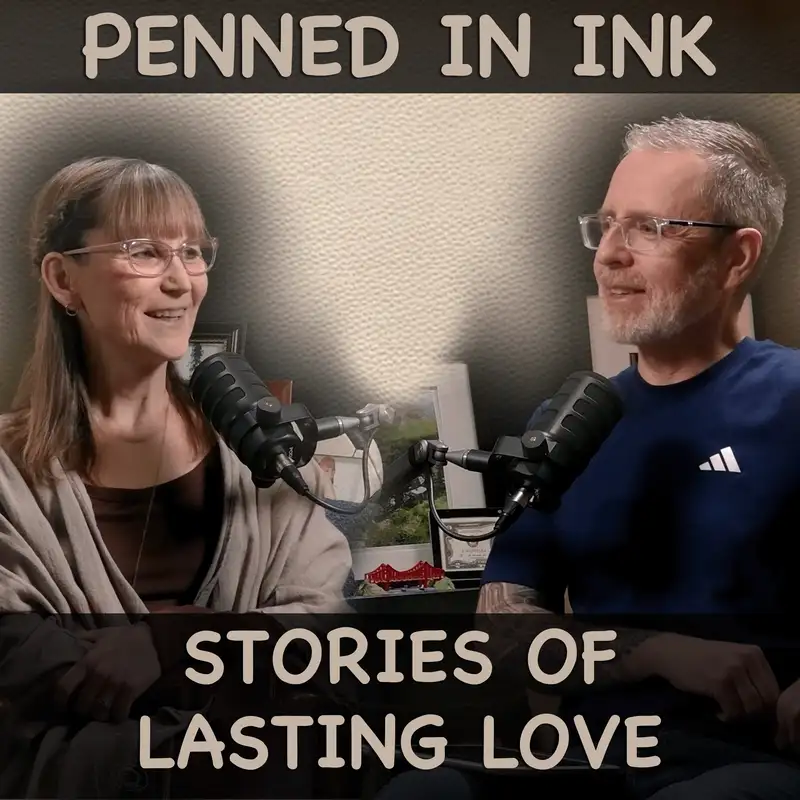
I'm Michael, and I'm here with my wife, Melissa.
Today, we will share a brief version of our story and outline our vision for future discussions.
We'll tell you how we met, discuss some relationship milestones we've celebrated, introduce some challenges we faced, and give you a sense of why we are here and why we hope you will join us as we explore the power of building a full life together.
Given this is our first episode, we thought it would make sense that we spend a little bit of time introducing ourselves, and what better place to start, but our story of how we met.
So you wanna do that?
Start with our story?
Yeah.
All right.
Guess I could do that.
Are you gonna start with our story?
I'm working on my pauses.
Are you waiting?
You don't have to pause in that stuff.
You can talk right through that.
Ah, our story.
Yes, that's a fun one, I feel.
And I said that to somebody just the other day, and I got down with my story, and they said, you're right, that is fun.
We met when we were eight or nine, playing soccer.
I hadn't played a lot, but I was learning the game, and I was enjoying it, and Michael was already very good at the game.
Caught my eye, I'd say he was probably a crush, and so we played against each other.
Like I said, I had a crush.
Sometimes I'd go watch you play, practice, because the fields were near my home, walking distance, and that was later, not in the eight, nine year.
That was more like 12, 11, 12 years old.
I would say that was how it started.
I don't know how far you want me to go with.
No, we got time.
So obviously we met as very, very young kids.
So 10, we were a little older than 10.
So I guess we sort of met each other, what, 35, 40 years ago.
Let's fast forward just a little bit, so we don't do miles and miles and miles of our story.
We did start dating when?
It was right before my freshman year of high school.
So I was 14, you had just turned 15.
Yeah, so very, very early on.
Did we date all the way through?
No, that's a story for later on.
That's a fun story too.
There's a few confounding issues that happened in there.
Some were self-created, some were created by me, some were external factors, but we'll get into all that.
But we dated all throughout high school, went on and eventually went to same college, dated through college, then got married, well, like right after college.
Right after you were done with college.
I still had a year.
Yeah, that's another story too.
But that's gonna be a common theme throughout the first episode, is that's a story for another episode.
But yes, we dated all the way through college, got married right after college.
Shortly thereafter, what'd we do?
We bought our first house, lived out in the country, in Oregon, so we'll talk some Oregon stories and Oregon family stories.
And then we'll talk our current home, home for the last 22, 23 years. 22 and a half, yeah.
We lived in Raleigh, North Carolina.
So we were both born and raised in the Pacific Northwest, but we moved as a family with two lovely young daughters at the time.
Family love that my grandma and grandpa loved that I took the family and moved across the country.
Yeah, so moved here.
Initially, what, it was a five-year plan.
We'll be here five years, and now we've been here over 20 years.
So yeah, we love the area.
We did mention already that two daughters who moved across, we got two kids.
We're very fortunate.
We've gotten them all the way through adolescence and through college and launched and out there.
Success.
Yeah, exactly, and so we're empty nesters minus a dog that will probably wander in here at some point.
But I feel like that's a pretty good introduction in a very, very quick, very, very quick of what our story is.
This might be a good time to introduce what are our reoccurring segments.
So for the most part, we're going to just talk.
We're going to share stories, but we want to give you guys a little bit of a framework for sharing, and we want some common segments or themes we come back to.
And so one of the ones we want to always do is we always want to share a memory that we have from our relationship that's related to the day's topic.
And today's topic is all sort of about our origin story and why we're doing this.
And we're going to call this first segment Inked Moments.
So the moments that are sort of emblazoned in our memories.
You will probably find out during this podcast that I don't remember a lot.
So I do have a few memories, but that's one of my things.
I do not have memories from being very young.
We do have our puppy walking into the stage here in a second.
So you might get to see a little shot of her there.
She's old and she will go lay down and probably be out on board with us here shortly.
So yeah, so this first Inked Moment, do you have a first date or an early dating memory?
Yeah, and I think it was that summer before.
So we hadn't started dating yet.
Summer before high school.
Yeah, I believe.
Sounds right.
I guess it could have been the year before.
I know which story you're about to tell, so I think that sounds about right.
Okay, and my best friend was having a party, an end of summer party, and she had invited you.
And then obviously, best friend and all that, and.
Shout out to Sasha, go check out her podcast.
She's got a nice podcast running about sports.
Sports will save us all.
There you go, so there's your first shout out.
Anyway, go on.
There you go, yes.
So Sasha.
Yes, and we danced together.
And just once, but I remember it like it was yesterday.
Was that at the church hall, community center?
What was the hall that they had the dance?
It was right up the road from her house.
They lived out in the country.
We came from a very small town, and they lived out in the country.
And it was just like halfway between her house and the city proper, if you want to say.
Town proper.
Good, good point, town.
And so, yeah, it was just, I think it was a place that you could kind of rent out and do in, or they knew the owners or something to that effect.
And so, yeah, it was a unique place to throw an end of summer party.
Yeah, so I remember that, because at this time, this was before high school, so I lived out in the even smaller town, way out in the middle of nowhere.
So I was in a city of country boys, and country girls.
I was from the country country of, I grew up in a town that had like 250 people in the proper town, and you lived in the big town that had, at the time, probably 10,000.
It's way bigger now, but at the time, very few.
So I remember that, because that was one of the first times that I was sort of out with all the kids that I'd play soccer against and were in that circle, because I was not in your friend group or anything.
I remember that.
Well, I think my first, before you had brought that one up, because I do remember that one, but when we were planning for this, one of my early memories was, so you mentioned soccer.
We played a ton of soccer, and I think by the time we were just about dating, we were still playing club soccer, in addition to high school soccer and that sort of stuff.
I remember being in a tournament up in Portland, and I don't know if it's the first time that I asked you out, or we just ended up at the same place, but we ended up shopping at the mall up there, and I remember spending an afternoon with you.
I think that's one of my first sort of rock-hard memories.
I remember the one you just shared, but yeah, I remember that was a good day.
So very long ago.
So I think that's- It was, we're talking, you know, mid-80s here.
Yeah, yeah, mid-80s.
Not our age, but the year that we were celebrating.
Maybe we'll be doing this in our mid-80s, but I know that's not what you were saying.
You just made it sound old.
I gotcha.
All right, so yes, I think those are some good, good sort of early memories.
And as we go throughout the podcast, the whole point here is we're going to share stories from our journey, from our life, and you'll get some, hopefully some nuggets of advice along the way through this, but a lot of it is just going to be revisiting what's worked for us and what stories and everything.
So I think that was a good first story.
Yeah, super long ago.
It's kind of fun going down memory lane, though.
I think that's going to be one of the things I really enjoy about doing this.
Yeah, I think so.
I mean, yeah, we'll get a little later on in this session, this episode, we'll get to what we're looking for and why we're doing this.
I think that definitely is on the list of like, yeah, nostalgia and revisiting some stuff.
All right, so let's talk a little bit about our early years.
We talked about getting married just out of college, right?
Super, super young.
So that puts us at what, 21, 22, something like that.
21.
Back then, that wasn't as crazy young as it is today.
Like today, if you get married at 21, 22, that's super young.
I think it was more common.
I mean, we'll reflect on this later, but your parents were married at super, even younger.
Super, even younger than that.
Yeah, so it was, I think in their generation, getting married at 18, 19 was, okay, that's something you might do.
Ours were still on the cusp of early 20s was sort of when you get married.
Clearly now, people are choosing to get married a lot longer and that will absolutely be a topic we dig into and discuss, and our girls are in their mid-20s and we'll talk about their cohort of friends and all that sort of stuff.
But I think this is a good time to just talk a little bit about maybe some of the early struggles we had.
And another reoccurring theme is we don't struggle a lot in our relationship, but when you get married at 21, there are obviously struggles, right?
What, and this is when we were living in Oregon, what were some of your early memories of struggles that we had when we were just getting married?
We didn't see a lot of each other, first couple of years.
I mean, weekends, obviously, but I was in graduate school.
And so I was doing that, mainly in the evenings.
And then I was working during the day.
You were working full-time.
So you were Monday through Friday kind of thing, but.
All right, just try not to do that very often.
I think I'll work on that.
Melissa's a hand talker and hand talks right into the mic.
We'll just hold my hands in my lap.
You were a Monday through Friday, but I was not.
I was for school Monday through Friday.
Were you bookkeeping at Red Robin at this point?
Oh, boy.
Or was that later on?
No, well, I started serving and then it moved to.
Oh, that's right, you served first.
I forgot about that, yeah.
Then I did the bookkeeping.
So yeah, I was working at Red Robin.
So there's some good memories from there, but we didn't see each other a lot.
Yeah.
Cause we were both so busy and my school was, you know, 45 minutes from the new house we had bought and the restaurant was 30 minutes the other direction.
Yeah, now that you're saying this, this is pre.com.
So this was, so we'll dig into our careers and how our careers have shaped our relationship and interactions and stuff.
But I was working for, I think at that time, early, early on, I was working, doing some technology programming for CD-ROMs and interactive tutorials.
Used to go in the back of textbooks.
How we sound old on this first podcast is great.
That's okay.
So I was doing some of that work.
And then I think, you know, a couple of years fast forward that I was definitely doing dot-com work and those were super long hours.
So yeah, and then, yeah.
Okay, so yeah, so not seeing each other.
So time, this will get into topics later, but building careers and how do you balance, you know, relationship goals with career goals, friendship goals.
Those are all things we're going to discuss cause we've navigated through all those.
Yeah, I think, you know, this is a good time to introduce sort of this concept of cornerstone marriages and capstone marriages.
And this is something we're going to talk about.
And you hear this a lot if you've been on social media and that sort of stuff, or listening to, you know, your favorite psychology podcast or relationship podcast, because don't we all have one that's our favorite?
You said that with a straight face for a second.
Hopefully this will become your favorite.
Right, yeah.
So cornerstone or foundational, this talks about marriages that typically happen very early in life before you have had a chance to really establish yourself as an individual.
You might build them on shared goals, shared ethics, shared values, but you're in parallel to building your relationship, your marriage, you're building your own identity and everything versus capstone, which is if you get married later in life, you've spent more time hopefully developing your own.
Right.
Life, your own interests, your own career.
You might be delaying marriage for one reason or another.
They refer to those as sort of capstone, or you know, you're putting, you know, you're putting work in on yourself before you are a relationship.
And I think that's a big change from when we got married.
You know, I think a lot of our cohorts, a lot of our friends were getting married very early, a lot of cornerstone marriages.
And we'll talk about what that means as far as like staying together and power and that sort of stuff.
There's some awesome research coming out on that, but that's not today's topic.
But I would say one of our, some of our early struggles were around just sort of trying to find our own way, let alone a couple way, right?
We had been dating for very long by the time we got married.
So we had a good, like we were solid, but we were very much trying to figure out what we were doing career-wise, what we were doing, you know, day to day in our lives.
So I think that was a challenge of getting married early.
Got any other challenges?
There's one other we sort of talked about at the wrap a little bit.
Financial, I think.
Yeah.
You know.
Yeah, being poor sucks.
Right?
Yeah.
I mean, I don't want to put too tight of a button on it, but when you start with, I mean, no money, that's hard.
And I think a lot of couples, you know, still today, that's a big struggle when you start with no money.
And talk about that a little bit before I sort of go on a soapbox.
I love finance.
And you know what, I didn't until we got together, but I do now as well.
Whenever anybody starts talking about finance, I'm right there.
I want to, you know.
So yeah, I was still in college, grad school, and working, you know, waitressing doesn't pay super well.
Neither does bookkeeping at a restaurant on Saturday and Sunday mornings.
Yeah, but you got free food to come home.
So I got some good quesadillas from Red Robin.
Yeah, yeah.
But now you hardly touch the stuff.
Yes, stay in Red Robin, yeah.
I still like it on occasion.
But anywho, beside the point.
Sorry, Red Robin.
Yeah, now they're not going to endorse us.
Because you're going to smack talk them.
You got me off track.
Finances.
Anyway, thank you, finances.
You know, when we had just bought a house and we had never owned a home before.
There were so many firsts.
Yeah.
Right after we, you know.
And just the number of things, you know.
I mean, yeah, the year we were in, our first year we were married, we were in an apartment.
So at that point I had learned about paying bills and whatever, but up until then it had been, I went straight from high school to college life.
And, you know, you pay through the registrar's office, if I remember, financial aid office, you paid that.
So I didn't, wasn't responsible for a lot of that.
Actually, I guess I did have apartment for a year.
But anyway, what it comes down to.
I'm going to laugh because you fast forward like 12 months and you were doing bookkeeping for Red Robin, which is awesome.
Go from no paying of any of your own bills and anything.
And then to being in charge of bookkeeping for a restaurant.
That's funny.
I hadn't really thought about that before.
Interesting.
It's good.
That's growth right there.
Right.
That's the joy of your 20s, man.
You can add new skills like crazy.
It's a little harder at my age to add skills although it's a big initiative of mine.
It's like always pressing and adding new skills.
But anyway.
Yeah.
Yeah.
So it was just, there was a lot, a lot going on.
But like you said, luckily we had had that, we had that foundation already because we'd known each other for so long.
We had built that relationship and occasionally it was, wow, it kind of sucks that we don't.
But we didn't fight about not seeing each other, which I think is good.
Or not having money.
Correct.
We didn't fight about those things.
It just was.
And we, you know, I think we're problem solvers and that's the route.
And I knew not everybody takes that route.
One of the things we'll discuss.
Yeah.
So I think that's a good sort of segue into a preview of a topic we will absolutely cover probably multiple times, which is how do we manage our finances?
How do we run our house?
You know, there's this huge debate sort of out in the social sphere about how do you, or do you combine finances?
How do you navigate if you're coming into a marriage and there's a wealth inequality?
How do you, you know, her money, his money, how do you deal with inequities in earning in the family?
We have some very strong opinions in this area, but something about, you'll find out about our opinions is they're just our opinions.
We don't look down on people who choose to go differently.
We don't, you know, we don't, I mean, we judge because we're humans, humans judge, right?
Right, yeah.
But like everybody will find their way and they'll find what works for them or they'll find what doesn't.
We have strong opinions on how we manage our finances.
And, you know, spoiler alert, we combined everything from day one, which is super easy when you're rubbing two nickels together.
Right.
And we've had very successful careers, but they are measured successfully different ways.
One financially, one in actually helping people.
I help people in my career, but it's a different way.
We laugh and we'll get into this, but I truly feel like your job helps you, you know, save people's lives and really help them get into a better place.
Mine's much more capitalistic.
Right, yeah.
Which helps people as well, but in a very, very different way.
So we'll talk about finances, combining them or not to combine them and benefits.
But I think, you know, in a real quick summary on the finances, you know, when you combine them and you do it right, it's a force multiplier.
And because, you know, where you spend your money is where your goals are.
And when you have shared goals and shared spending, it's pretty awesome, but it can cause problems.
So we'll dig into that.
But I think that definitely was an early sort of struggle.
So we can belabor this because, you know, early days have lots of stories and we've got lots of podcasts to tell lots of early days stories.
Anything else that jumps out as a struggle?
I have, it's kind of niggling at the back of my brain that I think there was trying to balance wanting to do a couple of things, but also family expectations.
Because once you combine, once you combine, you know, your family, my family, you know, and then there's birthdays, there's holidays, there's everything, right?
And so if I remember, once again, really long time ago, but if I'm remembering correctly, I think that was a thing, you know, do we have to go to everything that we're invited to from our families?
Yeah, balancing family expectations is another whole area we'll really dig into.
And yeah, definitely was that.
And we have very different extended family structures and expectations, so we'll dig into all that.
But that definitely is a huge thing that when you are combining, you know, and getting married, that's a big thing is how do you navigate extended family?
And I use the term extended family really intentionally, because one of the things that we did a really good job on, and I think we have always done a really good job on, is that once we were married, you and I became the immediate family, and everybody else has been extended family, and that's sort of how it works.
And I think where you cause problems is where you still are treating your familia family.
Is that right?
Familia family?
That sounds too Spanish, that's not right.
Family of origin?
I was just gonna say, in the psychology field, we call it family of origin.
So when you continue to treat your family of origin as your primary family, your immediate family, that's where problems come, because you and I have always been our immediate family.
And then when we had our two daughters, that became our immediate family.
Extended family is anybody outside our circle.
So, yes, that's a good one.
I propose we sort of move on, because there's other stories there that we can definitely share and dig into and everything.
So I think this is a good time to introduce another segment that we'd like to sort of play with a little bit.
And this we're gonna refer to as from his perspective and from her perspective.
I think, in this segment, what we envision is giving you exactly what it sounds like.
A little bit of a thought on today's topic from the male perspective and from the female perspective.
And I think we all can agree that we, as people, genders, we see things differently.
We prioritize things differently.
We're not gonna go down the very convoluted discussion of gender and all that sort of stuff.
But we're basically just gonna say, from a male perspective and from a female perspective, and just give a little bit on there.
So I think when we were talking about this, I thought, given we were talking how we met in our first story and that sort of stuff, we thought initial attraction might be sort of an area to talk about from a male perspective and from a female perspective.
But the spin we want to put on this is, what are some of the initial things that attract you?
And then put a pause on that and think ahead five years, 10 years into our relationship, what were some of the things that you realize now are super attractive or super important that maybe weren't on your initial list?
So I'll go first in this one.
Not to sound too much like a monkey brain male perspective, but well, there's a reason that we kind of make fun of male perspective on attraction.
Physical attraction matters a lot.
Now we'll put aside the fact that we've known each other for very young, we really started dating, we're talking high school, college.
I would say physical attraction is a huge piece of it.
Having chemistry from a very basic level is super important.
I think for men, for me, for my cohort of friends that I have, if you don't have that initial sort of physical attraction, it's really hard to get to any of the other stuff.
And I've got a good set of guys that I know in my life that have been married a very long time, who are very attracted to their wives, and they all look different, and they all come in different, like whatever, like attraction is however you define it.
I think physical attraction for men is really important.
And I'm just gonna stop at one for like initial attraction, because I'm gonna go to the follow-up question of maybe five to 10 years down, what a lot of guys in my circle who have not had success in their relationships, I think one of the things they've underestimated, and I very much like looking back have lucked into, is a partner who has a high emotional intellect, has the ability to sort of be resilient and emotionally balanced.
Doesn't mean we don't get upset, doesn't mean we don't get mad, doesn't mean we don't get angry, but the ability to like regulate and come back to a neutral emotional state is super important.
When I see people who live in a constant state of anger or fear or wherever, and they never come back, or they fight and they never come back, and they never forgive, they hold on, all that sort of stuff, I think emotional maturity, whatever you wanna call it, just the ability to regulate your emotions is something that more men should be really attracted to.
Because it's fun to have the super active, super dynamic, super wherever extremes, but it's really hard to live in extremes.
And I'm thinking specifically of a couple of our friends in our circle that every time they choose a partner, man, it's like there's red flags all over the place because that person is just hot and cold and all over the place, and it's like it's really hard to deal with that.
It's fun in the moment, but long-term, we got it.
So those are my two.
That was a long male perspective.
What you got from the attraction for women.
And don't lie, it's the exact same one.
I was just gonna say, no, that's exactly what I was gonna say, which is I think a lot of women would, I don't know where they'd go, but they'd be outright lying if they didn't say physical attraction.
If you don't find somebody, if somebody's not attractive to you, why?
I mean, you're not going to want to engage in discussions to get to the things that, and once again, you hit the nail on the head, which is everybody has a different view of attraction.
And so just because he isn't attracted to her doesn't mean he's not attracted to her or her whatever.
And so, oh yeah, women are lying if they say that's not.
What about money?
That's one of the things you hear out there.
Women are attracted to his money.
You hear that all the time.
I honestly, and I feel.
I didn't have any money, so thankfully that wasn't your big selling point.
Especially through, you know, my social circle isn't huge, but obviously my job.
I have, I actually have not, I've heard very few women that I've worked with that that's their focus when they're looking for, like I've helped some women make a list of what they're looking for.
They want financial stability, you know, but they're not looking for, so I haven't seen that.
So even though it's out there and it's like in the movies and TV shows and whatever, I haven't personally seen that in the women that I, and I've worked with hundreds of women over the last 20 years.
Maybe even, I don't know, I have never counted.
So let's put a little context around this.
We're gonna get into this in a couple episodes, but what is your profession?
Because, I mean, you said obviously, I know what your profession is.
Good point, not everybody obviously knows.
Obviously I know what it is.
The full title is licensed clinical mental health counselor.
So I'm a counselor.
Working with people's mental health, trying to help them become resilient.
A lot of the things that you were talking about earlier.
And so, and I've been doing that for a long time.
Took a break when I had the girls.
But in general, and I've been in private practice for, I think it's going on 14 years in October.
So, you know, and I carry.
So I've met a lot of people, a lot more people than like somebody in your profession meets.
And so I think I have, there's quite a bit of data there.
And, but that's also, we'll come back to it, cause it's gonna be, why are we doing this?
That's part of, there's something I've pulled from that, that has influenced my, when you mentioned doing this, I was just like, oh, that would help, da-da-da-da-da.
Which I won't go into when we get to that.
So we'll dig full on into your professional background for multiple reasons.
One, because it'll certainly lend credence to why people should listen to us.
You have sort of the academic credentials to back up a lot of the stuff we're gonna talk about.
You and I have the shared practical of what we're gonna talk about, but you actually bring the clinical background to some of the stuff.
We'll also really dig into the fact that you are not giving clinical advice and that you are simply sharing our stories and your opinions.
Need a disclaimer in there.
Yeah, we will not delve into, and nor should this be treated as guidance for you.
If you're, you know, we'll do one of those, quite frequently one of those disclaimers if you're needing help or assistance, seek out clinical help, et cetera, because this is not what this is.
This is not an approved therapeutic show.
This is more us sharing our story and that sort of stuff.
So you mentioned, you know, money not necessarily being on that initial attraction, but you gave sort of the side work to like stability and, you know, the ability to care for and stuff.
I think that's probably maybe not in that initial list, but it's certainly probably more so, well, I was gonna say it's more so of a female perspective on initial attraction.
But you know, in today's age when, you know, young men are maybe not as career-driven and stuff, maybe that's changing.
I don't know, we'll have to explore that.
Well, actually something I thought about when I said, you know, they're not looking for, maybe I need to explain.
The women I know aren't looking for somebody that's rich or that's well off.
But the one thing that I have noticed a lot of is they do want people that have goals and ambition.
Now that I've seen.
So maybe they don't have the, you know, they're not millionaires, but they want somebody that just doesn't, you know, sit around playing video games all day, for an example.
We'll do a whole deep dive onto attraction and qualities and features you should look for, but I think that's pretty good.
Give me a sense of, okay, that second part of that.
What do you, looking back or, you know, now knowing what you know now, what should the female perspective, what should women be looking for when they're initially looking at a guy?
Like, got anything that they, you wish you had sort of been more diligent about or aware of?
That's kind of a hard question based on, you know.
Don't offend me.
Well, no.
That's just a really hard one because I wouldn't have chosen differently based on it.
But I guess if you move forward, you know, somebody that supports you, maybe doesn't always understand what you're going through, but is supportive of you, I think that's a huge thing.
And maybe you don't think of when you're first starting to, you know, hey, is this person going to, you know, if I decide to make a career change, are they going to be behind me?
Are they going to, you know, be that, you know, maybe that strength when I'm weak or provide guidance or feedback or advice even.
Yeah, so it sounds like some of those things that are maybe not in the initial attraction, but when they get into the phase of, hey, what am I really looking for in a spouse?
What's important?
Yeah.
Yeah, that makes sense.
So I think starting with attraction is a fine place to be.
It's just, you can't be there for years, right?
If it's only attraction and you're still dating somebody a year later, that's a huge red flag.
Yeah, I mean, this is going to be a fun podcast because there's a whole like, man, there's a whole- I know, I hope I didn't spoil anything by saying something like that.
No, I mean, we got future episodes lined up and we're going to, I mean, this is what we're going to do.
We're just going to talk through stuff and we're going to roll the topics and we're going to have lots of things we want to talk about later, but we are giving very much an intentionality to what we're doing.
And we sort of laid out a roadmap, a narrative arc, if you will, of sort of how are we going to discuss all these things we've done in our relationship and what keeps you in a relationship, what sustains, what keeps you in a relationship longer than you should be is something that we'll definitely get into.
I was listening to, and I really should be giving credit to it.
Maybe I'll find it and put it in the show notes or something.
I was listening to a podcast a while back and it was talking about as soon as you introduce intimacy, as soon as you introduce sex into a relationship, and more so for women than men, you stay in it a lot longer than you should.
So yeah, chemistry will keep you in a relationship.
It's a great starting spot.
I would argue you really have to keep that alive if you want a lasting relationship, but you better layer on some more than that.
If it's not enough to sustain it, but it's sure a critical piece if you're going to sustain.
Yeah, so I think this is a good time to start talking about in like really specific terms, why are we doing this?
What's this podcast about?
This is our pitch to why we think you should listen, what we hope you get out of it, what we hope, who we think we're going to be talking to, what we want out of this podcast.
So my little pitch into here that we sort of wrote out about this is, you know, we've successfully navigated 30 plus years of marriage.
It's fun to say 30 plus, because we were like leading up to 30 and now it's 30 plus years of marriage.
Just as an aside, we started planning this and 30 was a little further away than it finally has happened.
So we'll talk about why are we doing it?
But yeah, it's fun to say 30 plus years of marriage.
And now we're watching our adult children and their cohorts, their circle of friends navigate relationships.
That's putting a whole new lens on a lot of these things.
We've already mentioned that you're a counselor.
You have a wide range, you see a wide range of marriages.
You've seen very successful ones, you've seen a lot of unsuccessful ones.
That's a little bit the nature of your work is people who are going through relationship adjustments, that sort of stuff.
You for a very, very brief time did some couples counseling, which was not your wheelhouse.
So- It's hard.
It is so hard, but yes.
Yeah, so you've seen a lot and we'll get into this and you alluded to it.
You've seen some commonalities and things and not just that you've brought into our relationship and how we've navigated, but I'm the beneficiary a lot and I'd be saying, wow, we do this really well.
Thanks, because you see the opposite of that.
So we'll talk about a lot of those things.
Overall, I think the perception of marriage is that it's an old fashioned, antiquated, outdated thing.
I think if you go onto any social media platform these days, it takes you about well, zero time to find somebody bashing on marriage, especially if you're a young man.
I think it's very easy to say marriage is terrible for men.
There's financial reasons, there's emotional reasons, there's all sorts of reasons.
I think in your work experience, it's super easy to find tons of examples of where it's really bad for women too, but through our podcast and sharing our stories and discussions that come out of there, I think we hope to sort of speak to those people who are considering long-term relationships, maybe those who are in the middle of their own journeys and having good times or bad times in discovery.
They want an ally to go with them.
They want some thoughts to maybe put to practice in theirs, but the core message that we wanna show is that when done right, marriage is a force multiplier.
You are better as a couple when you execute things well, and you can really build some powerhouse sort of things in your life.
That's been our experience, continues to be our experience.
So that's sort of the groundwork of like, hey, what are we trying to accomplish here?
So I hit a lot of the things we talked about, but I know there's some specific reasons you're doing this and goals.
But why are you doing this and what do you want out of the podcast?
Well, definitely what you were, everything that you just said.
One of the things is, you know, I see people that stay in relationships a really long time and I've heard them say, there's nothing better out there.
This is how all relationships are.
And I kind of, we are by far not perfect, nobody is, but I think we do a lot of things right.
And to show people that it can be done and that you don't have to accept, I think people accept a lot of things that aren't okay, because they think that's the norm.
And I don't want people to think that's the norm because it's not true.
Or maybe it is more normal than I think.
However, it doesn't have to be like that.
Yeah, you know, we're, I'm pretty fortunate that I've got in my, primarily in my work cohort, I got a bunch of dudes who've been married a long time.
Right, so I got, it's a little bit of a, I mean, statistically anomaly, because I got guys who've been married 30 years all over in my department.
But there's a lot of people who don't know anybody who's been married successfully more than a couple years.
And I've got another buddy that I'll, he will come up in conversations that I've spent a lot of time sitting and talking with.
And he's a younger guy, he's in his mid 30s.
And he has had, he's run the gamut in relationships and dating and all that sort of stuff.
And he has been in a couple of real serious relationships, but he is super gun shy about marriage and what it can do, and have had some good conversations.
And he's actually one of the people who sort of said, hey, you guys should share some of this wisdom.
He said, because we don't hear the voice of winning.
And you know, not to put too fine of a button on it, but when you win at marriage, you usually don't talk about it.
Because like you're winning, why would you spend time talking about it?
And I'm fortunate that I know lots of dudes who are winning in marriage, they're doing great.
And it's been really good.
So we thought, you know, a good thing to do would be to share some wins.
Like this is what a winning marriage can look like.
And all right, don't be offended by winning, but whatever term you want to put on it, but I don't know, we won, so we're good.
So who do you think you're talking to in this podcast?
Like if you had to pick like, I don't know, one or two sort of personas of who you want to talk to with some of your messaging, who would it be?
I think that's a good question.
I, was that in there before?
I don't remember.
I, having thought about that one too much.
It's good, that's the whole point.
The people that are disillusioned, the people that, and I know of some people where I've said, hey, have you ever had what you would call a healthy, we could go, we could spend hours on what healthy means, but have you ever had a relationship or seen one that works really well?
And I, there've been so many occasions where I've heard no.
And so I want people to know that it's out there.
So hopefully the people that are disillusioned that think, well, I guess this is just how relationships are and that maybe they can see that, well, maybe it doesn't have to be.
I don't see a lot of 50 somethings really.
That wasn't my thought, I guess, when we did that.
So probably more of those late twenties, thirties, maybe even early forties.
I don't know, that's kind of what I was thinking.
Obviously I hope people in their fifties, cause I do, I work with people in their fifties that are dating and they could use, now that I'm saying that, some of that hope that it can be good.
So I think that's it, what I would like.
Did you ask what else I was hoping to get out of it or who was I?
That's good.
You can let me answer a little bit too, it's all right.
You don't have to hold the stage the whole time.
No, you said something there that I think is pretty good.
So another common thing, I really should quote this podcast cause I listened to another podcast that I was listening to and this guy made a really good sort of point that I hadn't heard said this way.
And he said, he grew up with parents that had been married for like 35 years.
And he said, they gave me a vision, but they didn't give me a roadmap.
I thought that was a real interesting sort of deal.
So you've got a lot of people who have never seen successful marriage, right?
If you haven't seen it, do you know it exists and can you do it?
So I think that's part of our goal is to like show you what a successful marriage, not what all successful marriages look like, but what a successful marriage looks like.
Just to give you maybe some aspirational, like, hey, this can actually help and here's why.
But we wanna give you a little guidance along the way of things that help sort of you build your own roadmap to that and we're not gonna be self-help.
But we're gonna give you some takeaways of like, hey, here's something you should do, something we've done that works.
Tell you that's good.
From my perspective, the audience that I want to hear this message as we go in is young men.
Like, I think we have a, I will not get political on this.
Thank you.
Because that's another whole like, we could go on and on and on.
But I think the last five years have been really, really hard on young men.
And I think a lot of it is gonna leave lasting impact.
And I think one of those areas is relationships with young men and a sense of what's expected from them has really changed.
And one could argue some of those have changed for the better.
I would argue that a lot of them have changed for the worse.
And that I a little bit feel for our daughters as they have been sort of in the dating pool.
They've had some experiences that I've like, oof, okay.
But then also talking with my buddy who's in his 30s and some others, like, it's hard.
And so, you know, it's very easy to turn on your socials and go, why the heck would I ever get married?
You don't get the voice of why would you get married?
So I want to just give you the voice of why you get married.
You might choose not to, but I think talking to young men is probably something for mine.
So that's sort of an audience that's like, front.
And then it would be remiss of me to say that I'm not talking to young women too, because I have two daughters that I've given.
Probably more counseling to do today than they care to acknowledge.
No, I joke, they've been super receptive.
And I think you and I have invested a tremendous amount of time in building a rapport with them so that we can speak into their lives.
Your kids get to an age where you can't tell them stuff.
You got, they gotta, they gotta want to hear you.
And some get there really early.
But I think we've done a good job of like, you know, they want our guidance and stuff.
So I definitely speak to young women in my life about what they want.
So, but my, but, you know.
So I think that's, that's pretty clear.
You gonna say something there?
I thought you were taking a breath.
Gotcha.
Just breathing.
Just breathing.
I described some of our days, just breathing.
I think another thing we want to do is explore some of the misconceptions about what a healthy marriage looks like.
I think there's a lot of, you know, urban legend, urban myth.
This is what, this is what it's gotta be.
There's a lot of like, you alluded to this earlier, all men are, all women are, all marriages are.
So we're gonna talk a lot of those.
I've got some huge pet peeves in there.
I know you do.
So we'll dig into that.
There'll be some funny and probably not politically correct moments to come along with that stuff because that's the nature of it.
And we want to, and one of my rants that I will definitely get on is how marriage is represented in TV and film.
I cannot stand it.
I think we, for humor and for whatever, we just, we belittle it all the time.
And I've got some pet peeves around that.
So we'll have some fun.
Yes, you do.
Explorations of some of my rants on that front.
And then we haven't mentioned this yet, but one of the big things we want to talk about, a theme that will be weaved through here is sort of dispelling the myth that marriage is only for religious people.
And we'll definitely talk into this and dig into this a little bit more.
But I think there's a very easy case to be made if you're part of a church.
It's a little harder of a case to be made when you're not religious.
And so we'll talk about that, marriage is not just for those who are religious.
And then before I said last one on my list, any other reasons why you're doing this?
Oh, well, what we kind of started the podcast with, which is, you know, I'm gonna enjoy going down memory lane.
Not that, you know, I don't know, another way for us can connect, I guess.
Not that we're not connected, but you know, as we, when you get to 30 plus years, it's, you know, I don't know, it'll just be, I'm enjoying.
And I know of at least one thing that I'm gonna share in an upcoming, it's not session, what is it?
It's a- Episode.
Episode, thank you.
Session, you have a counselor coming out there.
Sorry, it's the counselor in me that I know you aren't aware of.
I mean, and don't, I'm not trying- A bombshell.
I'm trying not to be dramatic.
It's this little thing that he's going to say.
You've got another baby.
No, it's gonna be a, you what?
You knew?
Anyway, there's something I'm gonna be sharing.
But anyway, so I bet you there'll be other things.
I bet you there'll be something you shared that I didn't know.
Yeah.
Because I think there was even something a week ago or whatever that you said, and I was just like, and we talked about it, or maybe it was something I said, I don't remember.
So there's always something to learn about someone else.
And I would like to hear your perspective, his perspective on some of these things, because either they were really long time ago, I don't remember, or you didn't tell me what your perspective was, but likewise, I didn't either.
And so I think that'll be, so I'm really looking forward to that, just kind of this, I don't know, enhancing, there we go, that's what I'm looking for, enhancing our connection with kind of reliving this stuff.
Yeah, so I think, yeah, I agree.
I mean, I think, you know, there's gonna be the nostalgia part that's just fun for us to do.
But I'm a little cautiously hopeful that we find out good stuff about each other.
I think there'll be some stuff we uncover that's like, huh, I didn't really know that.
I think there's a little bit of a risk of like, we think we know each other, but we'll find out over the next, you know, weeks and weeks and weeks of doing this, how much did we really know?
And I think that'd be fun.
I think another sort of upside of this is, yeah, we hope that lots of people, you know, listen and join us and participate and give us their stories and all that sort of stuff.
And we hope we sort of build a community around healthy marriage and long-lasting love.
But if we just do an archive for our family, like that's cool.
Like Taylor and Alexa, oh, spoiler alert, those are our daughter's names.
No spoiler there, we're keeping it a secret.
You know, hopefully they'll glean some stuff on this.
Because I think, you know, just sharing some stories, that I guarantee you have never heard will be fun.
Assuming that we actually let them listen to this, we might block them on our channel.
Say you can't listen to it.
They might self-block on a few episodes.
I'm just telling you right now.
Probably so.
Yeah, so that's good.
So anything else you want the people to know about why we're doing this?
I think that's pretty good.
No, I think that- We've got massive topics coming up.
We're super excited about them.
We are going to do our best to plan the episodes, but not rehearse the episodes.
So you're gonna hear lots of discussions about topics that we think are interesting.
Yeah, there's a whole bunch of them.
Definitely.
So how about a closing segment?
I think we've been, I don't even know.
Future episodes, we should start a clock to see how long we've been sitting here chatting.
Probably so.
I don't really know, it could be a while.
Yeah.
So our final reoccurring segment, we're gonna call pen to paper.
Keeping with the pen and ink metaphor, for those of you who did not catch our last name, didn't look at the show notes, our last name is Penwell.
So in our whole being cutesy and everything, we thought penned in ink would be a good sort of show title.
We will talk a little bit about the dual meaning of ink, writing your love story, your lasting love story, but also we like tattoos.
I got a few of them on my arm that we'll inevitably get into.
Talk a little bit about those.
So keeping with that sort of writing metaphor, that tattoo metaphor, pen to paper.
This will be a section where we give you something that's practical as a takeaway, maybe something for you to apply in your own relationship, maybe something for you to think about and reflect upon.
So in today's episode, we've talked about our origin story.
In this segment, we're gonna give you a practical takeaway and an action step to help you write your own lasting marriage story.
We are pretty big on visualization.
Like we like to sort of speak into the world things that we want to have happen and that can happen in our finances or trips we wanna take or things we want for our daughters or anything.
I'm not a religious person, I'm not a super spiritual person, but I do have a few little areas where I sort of believe in the woo-woo of life and that things can happen.
And there's a couple like really moments in my life that stand out of like, wow, we really wanted that to happen, we thought about that, we really brought that forward.
So I believe visualization.
So with that, I think what we would challenge you with is to think a little bit, reflect a bit on what draws you to someone.
Where are you in your life right now and what are you being drawn to?
We've talked about attraction, we've talked about lasting love and marriage and stuff.
We've talked about our origin story.
What are you attracted to?
And then here's the challenge part of it.
We want you to set that aside and we want you to think of the you that's five or 10 years out.
What do you think that person will be attracted to?
What do you think they will find beneficial, positive, loving, attractive?
And maybe use that as a comparison when you're evaluating what are you attracted to?
That sound good?
That's a good one.
All right, I think that's today's pinned paper segment.
Nice, I like it.
Anything else you want to talk about today?
Think I'm good.
I think we've done a pretty good rundown through there.
Yeah.
I guess I will say just sort of on a personal note, we've been talking about doing this for a very long time.
One of the goals that...
It's not really a goal for the podcast, but one of the things that I think is pretty cool is that you and I have never taken on a creative endeavor together.
We've done lots of other things.
You have a private practice, we've done some business sort of stuff and worked around that.
We've obviously raised kids.
We've run a couple other side businesses and maybe not even a side business in the soccer club that we run that we'll talk about at some point, probably many, many times.
But I don't think we've ever done anything creative.
So I just want to say it's been fun over the last n number of months sort of planning this, envisioning this, and it's awesome to be started.
I look forward to seeing where it goes.
Yeah, we'll definitely grow our relationship and how we work professionally and creatively together.
There you go.
All right.
I like it.
So with that, let's wrap up today.
I want to thank you all for joining us.
We invite you to connect with us, share a comment, ask a question, maybe tell us your own how it started story.
And if you like this content, please give it a like, leave us a positive review, and remember to subscribe to stay notified about future episodes.
Thanks all. you